The Space Weather Operational Readiness Development (SWORD) Center of Excellence, led by principal investigator Dr. Thomas Berger at the National Center for Atmospheric Research/High Altitude Observatory, aims to improve our ability to predict and understand the impact of space weather events on satellites in low Earth orbit and in cis lunar space.
The primary focus of SWORD is to predict how the geospace environment responds to the constantly changing output of the Sun throughout its magnetic cycle, effectively connecting forecasting models of space weather in both the thermosphere and ionosphere. In addition to physics-based models, SWORD employs advanced data assimilation methods to improve the ability to forecast conditions during geomagnetic storms, which is crucial for protecting satellites, airlines, and other orbital space operations from any adverse effects of geomagnetic storms.
Track 1 led by University of Michigan links plasma physics models for the near-Earth space environment with neutral gas models for the upper and lower atmosphere targeting improvements to space weather forecasts in the low-Earth orbit environment.
SWORD Track 1 develops and validates coupled first-principles models of the magnetosphere-ionosphere-thermosphere system, bridging research-grade physics with operational forecasting to protect assets in geospace. Led by the University of Michigan, Track 1 unites seven partner institutions and NOAA's Space Weather Prediction Center.
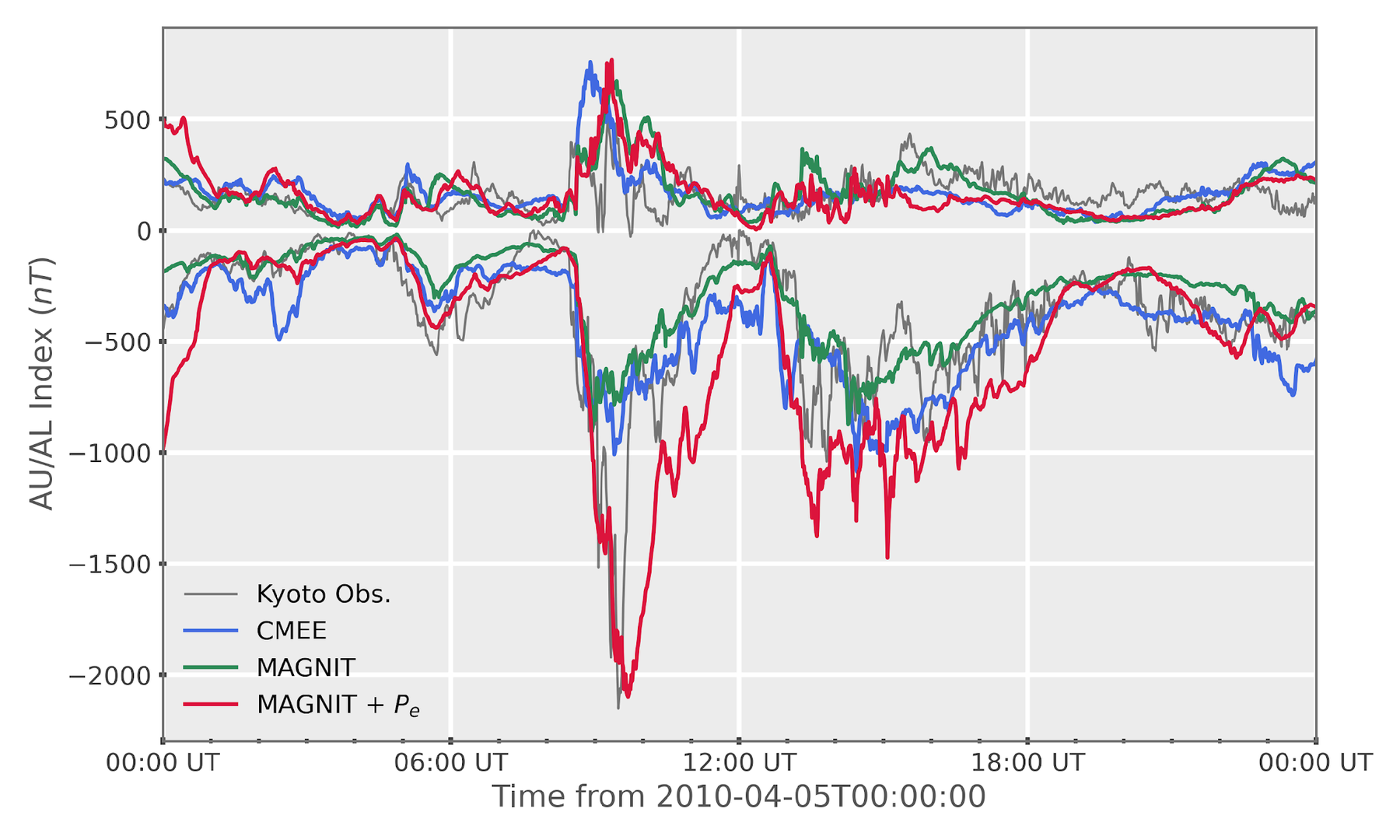
What SWORD delivers: Physics-based models for the space environment starting from solar wind through the magnetosphere to the ionosphere and upper atmosphere. Our special focus within SWORD is the ionospheric TEC and upper atmosphere neutral density, but the modeling suite lends itself to other applications such as ground-based magnetic disturbances as well. If you are a space weather end-user and interested in learning more, please contact us!